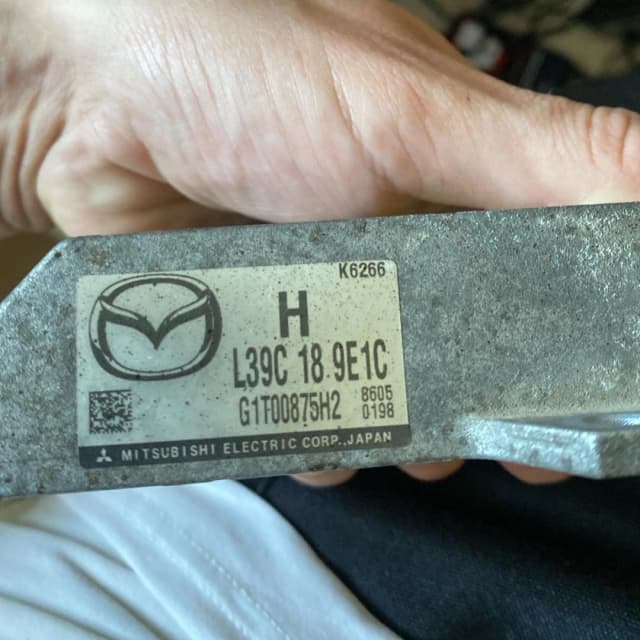
The FNR5 control unit: general information, common problems and fault codes
Introduction to the FNR5 control unit
The FNR5 control unit is an advanced device used in automatic transmissions, particularly in vehicles built by Ford and Mazda. The FNR5 gearbox, also known as the FS5A-EL, is a five-speed automatic transmission that requires precise electronic control. The FNR5 control unit plays a key role in delivering smooth, efficient gear changes, which in turn affects the overall performance and efficiency of the vehicle.
How does the FNR5 control unit work?
The FNR5 control unit monitors and controls gearbox operation using a range of sensors and actuators. Its main tasks are:
- Torque control: the control unit regulates torque to deliver smooth, fast gear changes.
- Oil temperature monitoring: it keeps the fluid at an optimum temperature, which is critical for gearbox longevity.
- Fault diagnostics: the control unit has a built-in diagnostic function that detects and reports any problems.
- Adaptation to driving style: it learns the driver's style and adjusts gearbox behaviour to optimise comfort and performance.
Common problems and fault codes on the FNR5 control unit
Like any advanced system, the FNR5 control unit can run into a range of problems and faults. Here are the most common ones:
Fault P0755 - shift solenoid B problem
This is one of the most frequently seen faults. It can be caused by a damaged solenoid, a wiring problem or a defective control unit. It shows up as difficulty changing gear and jerking while driving.
Fault P0715 - shaft speed sensor problem
This code points to a problem with the shaft speed sensor, which is critical for correct gearbox operation. It can lead to incorrect transmission behaviour and a loss of driving smoothness.
Gearbox overheating
Excessive gearbox overheating can be caused by cooling system problems or contaminated fluid. The FNR5 control unit monitors fluid temperature, but if the cooling system is not working, the gearbox can be damaged.
CAN communication problems
CAN (Controller Area Network) is the communication system that lets the vehicle's modules exchange information. CAN communication problems can cause faults in FNR5 control unit operation, which in turn can make the gearbox behave incorrectly.
Electronics failure
The FNR5 control unit is an advanced electronic device, and as such it is vulnerable to failures caused by moisture, vibration or mechanical damage. A control unit failure can lead to a variety of gearbox problems.
How to diagnose and repair FNR5 control unit problems?
Diagnosing FNR5 control unit problems requires specialist diagnostic equipment that can read fault codes and monitor gearbox operating parameters. Here are a few steps you can take to diagnose and repair the unit:
- Reading fault codes: using an OBD-II scanner to read the fault codes stored in the control unit memory.
- Checking the wiring: inspecting the wiring and connectors to make sure there is no damage or corrosion.
- Testing sensors and solenoids: checking that the shaft speed sensors and solenoids work correctly, using a multimeter or an oscilloscope.
- Checking the fluid: inspecting the quality and level of the gearbox fluid, and replacing it if needed.
- Software update: in some cases the problem can be solved by updating the control unit software.
Summary
The FNR5 control unit is a key part of the automatic gearbox and keeps it working correctly and efficiently. Although it is an advanced and reliable device, it can still run into a range of problems and faults. Regular diagnostics and maintenance are essential to keep the gearbox in good condition and driving comfortable.
Repaired control units:
Below is a list of the control units we have repaired